
Tbilisi to Borjomi: Transfer, Train or Marshrutka (2026)
Quick answer
The quickest way from Tbilisi to Borjomi is by road: the 160 km drive takes about 2 hours 30 minutes, and a private transfer costs from €100 per vehicle. Marshrutkas from Didube cost around 15 GEL and take about 2.5 hours, while the slow train takes over four hours. Bakuriani ski resort is about 30 km further.
In this article
Borjomi is Georgia's best-known spa town: a 19th-century resort in a forested gorge, famous across the former Soviet Union for its naturally sparkling mineral water and the gateway to Borjomi-Kharagauli National Park. It is also the last town before the ski resort of Bakuriani and a natural stop on the way to Rabati Castle and the cave city of Vardzia. This guide compares every way to get from Tbilisi to Borjomi, from a private transfer to the train, the marshrutka and a hire car, then covers what to do when you get there and how to continue into the mountains. Prices and timetables are as of late 2026 and change often, so treat them as a guide and check locally before you travel.
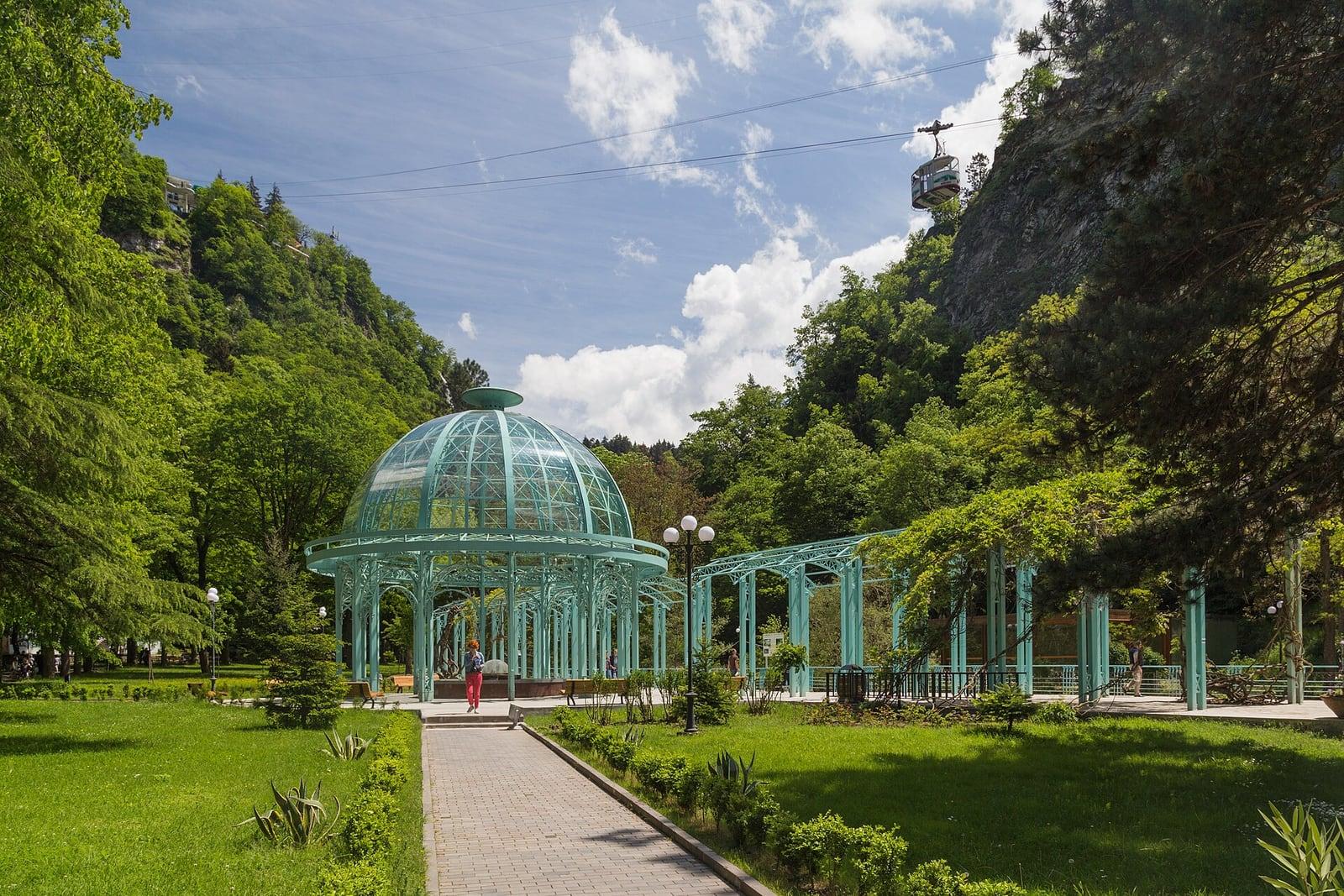
Where is Borjomi, and how far is it from Tbilisi?
Borjomi is in the Samtskhe-Javakheti region of south-central Georgia, about 160 km west of Tbilisi by road, a drive of roughly 2 hours 30 minutes. The town sits at around 800 m in the narrow Borjomi Gorge, where the Mtkvari (Kura) river cuts between wooded ridges, and the protected forests of Borjomi-Kharagauli National Park start on its edge. Its springs made it a fashionable resort in the 19th century, when the town was granted to the Romanov Grand Duke Mikhail Nikolayevich and his family later built a palace at nearby Likani, and bottled Borjomi water is still its best-known export.
Tbilisi to Borjomi at a glance
A private transfer is the fastest door-to-door option, the marshrutka is the best value for solo travellers, and the train is the cheapest but by far the slowest. Here is how the main options compare.
| Option | Journey time | Cost (late 2026) | Best for |
|---|---|---|---|
| Private transfer | About 2 h 30 min, door to door | From €100 per vehicle | Families, groups, luggage, airport arrivals and stops on the way |
| Marshrutka from Didube | About 2.5 hours | Around 15 GEL (≈ €5) per person | Solo travellers and couples with light bags |
| Train from Tbilisi Central | About 4 h 15 min | Around 2 GEL (≈ €0.70) | Rail fans and travellers with time to spare |
| Hire car | Roughly 2 to 3 hours of driving | Rental, fuel and parking | Road trips continuing to Akhaltsikhe or Vardzia |
| Group day tour | A long day, around 13 hours | Per person; entry fees often extra | Seeing Borjomi, Rabati and Vardzia in one go |
Private transfer: the easiest door-to-door option
A private transfer takes you from your hotel, apartment or Tbilisi Airport straight to your accommodation in Borjomi in about 2 hours 30 minutes, with no changes and no waiting for a minibus to fill. Lemora Travel's private transfer from Tbilisi to Borjomi starts from €100 per vehicle, a fixed price agreed when you book rather than a per-person fare, so it becomes better value with every extra passenger. You can choose a sedan, a van for families and groups with bags, or a luxury vehicle, and book online in English, French, Arabic, Georgian or Russian.
A transfer makes most sense if you are landing at Tbilisi Airport and heading straight out of the city, travelling with children or ski gear, arriving late in the evening when minibuses have stopped, or simply want to stop at Uplistsikhe or Gori on the way. If you are flying in, your driver tracks your flight and meets you in arrivals with a name sign, at any hour, so a delay does not cost you your ride. If you would like a sightseeing stop, mention it when you book so it can be confirmed with your transfer.
Tbilisi → BorjomiView transfer & prices · €100Is there a train from Tbilisi to Borjomi?
Yes, but it is slow: a local commuter train runs from Tbilisi Central Station to Borjomi and takes about 4 hours 15 minutes. As of mid-2026, two trains a day were reported in each direction, leaving Tbilisi at around 06:35 and 18:45, with the return trains leaving Borjomi at around 05:50 and 16:30. The fare is a token 2 GEL or so (about €0.70), the carriages are basic, with hard seats and no air conditioning, and tickets are not sold online.
- Get off at Borjomi Parki station, a short walk from the town centre and Central Park, rather than the main Borjomi station
- Carry a bank card: recent reports say the fare is paid by card, not cash
- Timetables change and some sources report fewer departures, so check the times at Tbilisi Central Station before you plan around the train
- The morning train arrives just before 11:00, which leaves time for the park, but the evening train arrives late at night
How do you get to Borjomi by marshrutka?
Marshrutkas (shared minibuses) to Borjomi leave from Didube bus station in Tbilisi, next to Didube metro station, roughly every hour from about 08:00 to 19:00. The trip takes around 2.5 hours and costs around 15 GEL (about €5) per person as of late 2026. Minibuses usually leave on the hour but can go early once every seat is taken, so arrive at least 30 minutes before you want to leave, especially at weekends and in summer.
- Buy your ticket at the ticket desk inside the Didube terminal, near the Bank of Georgia branch
- Minibuses end at Borjomi bus station in the south of town, but they run along the main road by the river, so you can ask the driver to drop you nearer your hotel
- There are no sightseeing or photo stops, so the marshrutka doesn't work if you want to see Uplistsikhe on the way
- Space for big suitcases is limited; skis and large bags can be a problem in winter
- Return minibuses leave Borjomi bus station for Didube from about 08:00 until early evening; check the last departure locally
- Bolt works in Borjomi, but drivers are few, so do not count on a ride-hailing car to get you around
Hire car, day tours and other options
Driving yourself takes roughly 2 to 3 hours, and a hire car pays off if you plan a longer loop through southern Georgia, for example Borjomi, Akhaltsikhe and Vardzia over two or three days. The route is fully paved: the main east–west highway out of Tbilisi to Khashuri, then a two-lane road down the gorge. Traffic drives on the right, and the gorge road also carries traffic to and from Turkey, so allow time and avoid overtaking on blind bends. In winter, snow is possible in the gorge and likely on the climb to Bakuriani, so make sure the car has winter tyres.
Group day tours from Tbilisi usually combine Borjomi Central Park with Rabati Castle in Akhaltsikhe and the cave city of Vardzia. They are good value for solo travellers, but they make for a very long day of around 13 hours, most of it on the road, with about an hour at each stop, and entry fees to the sights are often not included. If you want more time in Borjomi itself, it is usually better to stay at least one night.
What is the drive from Tbilisi to Borjomi like?
The drive is straightforward and scenic. You leave Tbilisi on the main east–west highway, passing Mtskheta, Georgia's ancient capital, and heading west across the plains of Shida Kartli past Gori. At Khashuri you turn south onto the S8 road, a two-lane route that follows the Mtkvari river through the Borjomi Gorge, with pine forest on both sides, to Borjomi and on to Akhaltsikhe and the Turkish border. The last stretch through the gorge is the prettiest part of the trip, particularly in autumn.
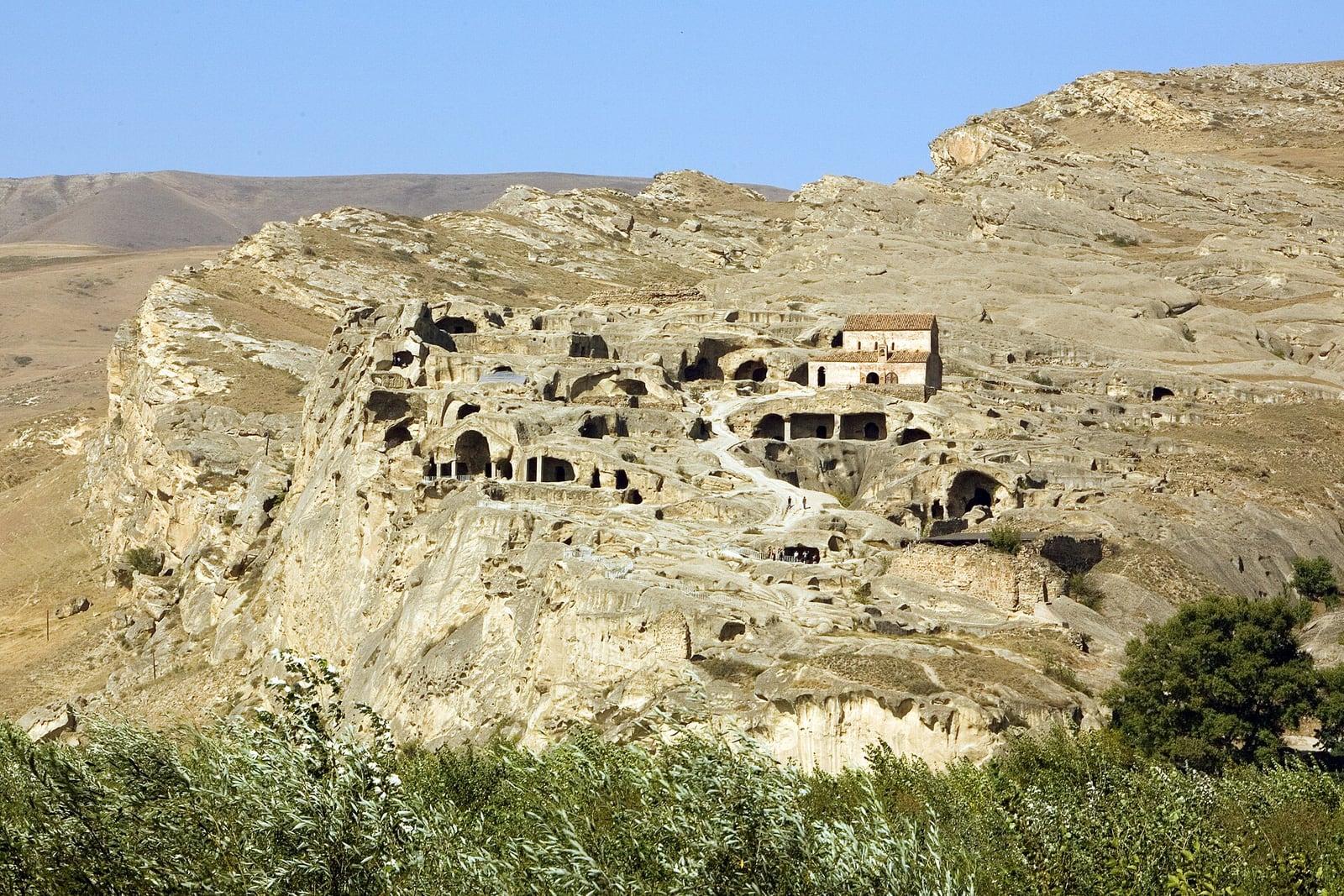
The best stop on the way is Uplistsikhe, a rock-cut town about 10 km east of Gori on the bank of the Mtkvari, which is one of the oldest urban settlements in Georgia and has been on UNESCO's tentative World Heritage list since 2007. Allow about 1 to 1.5 hours to walk around it; there is little shade, so bring water and a hat in summer. Gori itself is known for the Stalin Museum, and Mtskheta, just outside Tbilisi, is home to Svetitskhoveli Cathedral and Jvari Monastery. You will find more on these in our guide to the most beautiful places in Georgia.
What is there to do in Borjomi?
Borjomi is a place to slow down: taste the water, walk in the forest and soak in warm sulphur pools. The main sights are all within walking distance of Central Park, and most visitors find one full day enough for the town itself.
- Borjomi Central Park: a long, leafy park along the Borjomula stream, open from early morning to evening, with a small entry fee of around 5 GEL as of late 2026. Fill a bottle with warm, salty mineral water at the glass-domed spring pavilion near the entrance
- Sulphur pools: the open-air pools sit about 3 km from the park entrance, a walk of 30 to 45 minutes up the valley. The water is around 30–32 °C, the pools are open all year, and entry was around 15 GEL in late 2026
- Cable car: a short ride from the edge of Central Park up to the Borjomi Plateau, with views over the town and a Ferris wheel at the top; fares reported in late 2026 were around 15 GEL one way
- Borjomi Museum of Local Lore: a small local history museum in town, founded in 1938
- Likani: the former Romanov summer palace on the edge of town is closed to visitors, but you can see it from the riverside, and Likani is the starting point for national park trails such as the Footprint Trail
- Green Monastery: a small medieval monastery in the forest, probably from the late 9th century, reached by a walk of about 45 minutes from the main road
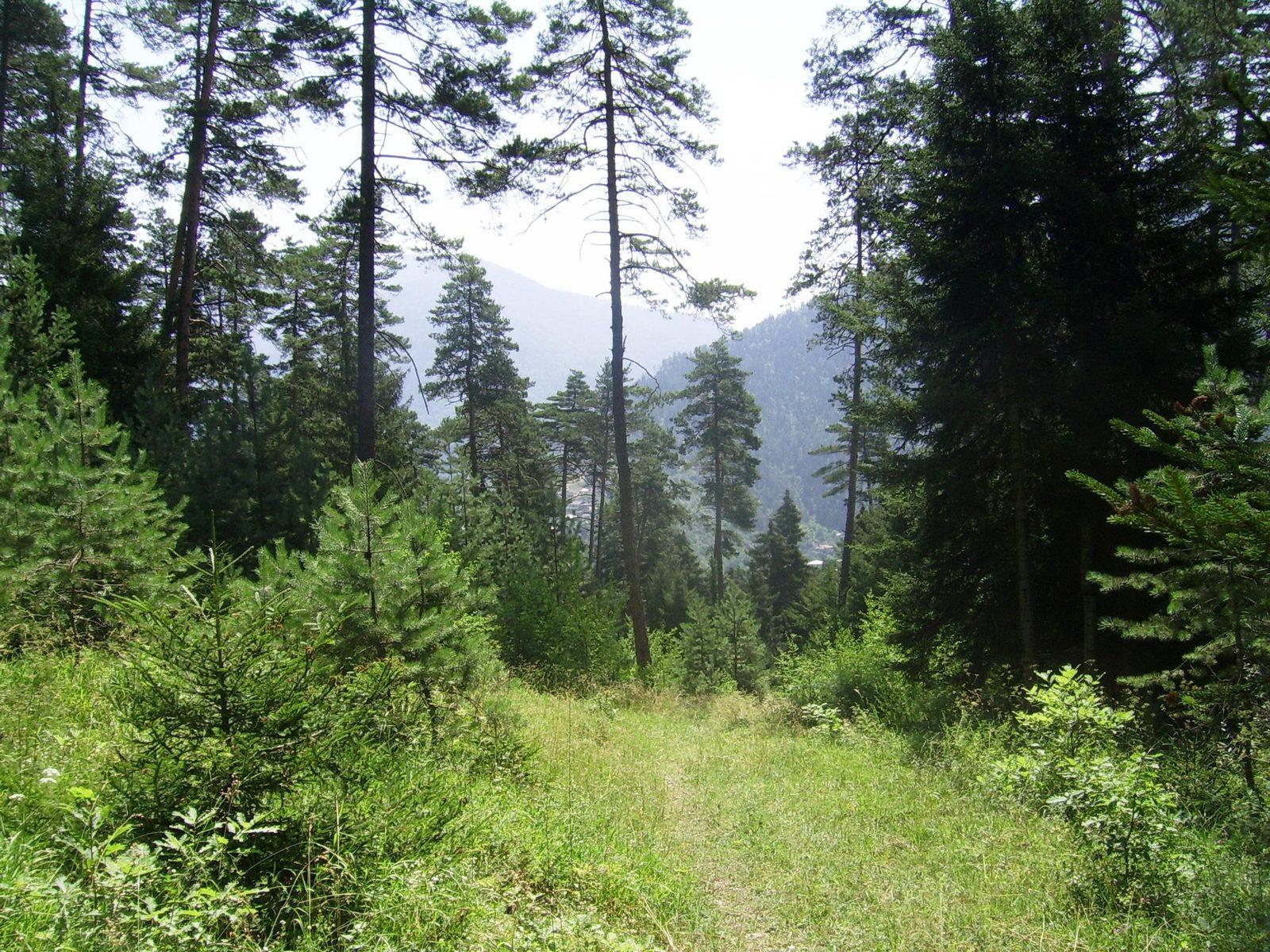
Hiking in Borjomi-Kharagauli National Park
Borjomi-Kharagauli National Park, founded in 1995 as the first national park of independent Georgia, is one of the largest protected areas in Georgia, covering more than 1% of the country's territory in the forested mountains between Borjomi and Kharagauli. It has a network of marked trails, from day hikes such as the Footprint Trail, about 13 km from Likani and 6 to 8 hours long, to the St Andrew's Trail, a crossing of the park over several days, plus snowshoe routes in winter. Visitors must register before entering the park; the visitor centre is at 23 Meskheti Street in Borjomi, where you can also get maps, rent bikes or snowshoes and ask about shelters for overnight hikes.
How do you get from Borjomi to Bakuriani?
Bakuriani is about 30 km from Borjomi, a drive of roughly 40 minutes to an hour up a narrower, winding mountain road. By public transport, local marshrutkas leave Borjomi bus station several times a day, take about 45 minutes and cost around 3 GEL (about €1), while a taxi costs roughly 50–70 GEL. There are also direct marshrutkas from Didube in Tbilisi to Bakuriani each morning for around 20 GEL. In winter the road can be snowy and icy, and minibuses fill quickly with skiers and their gear.
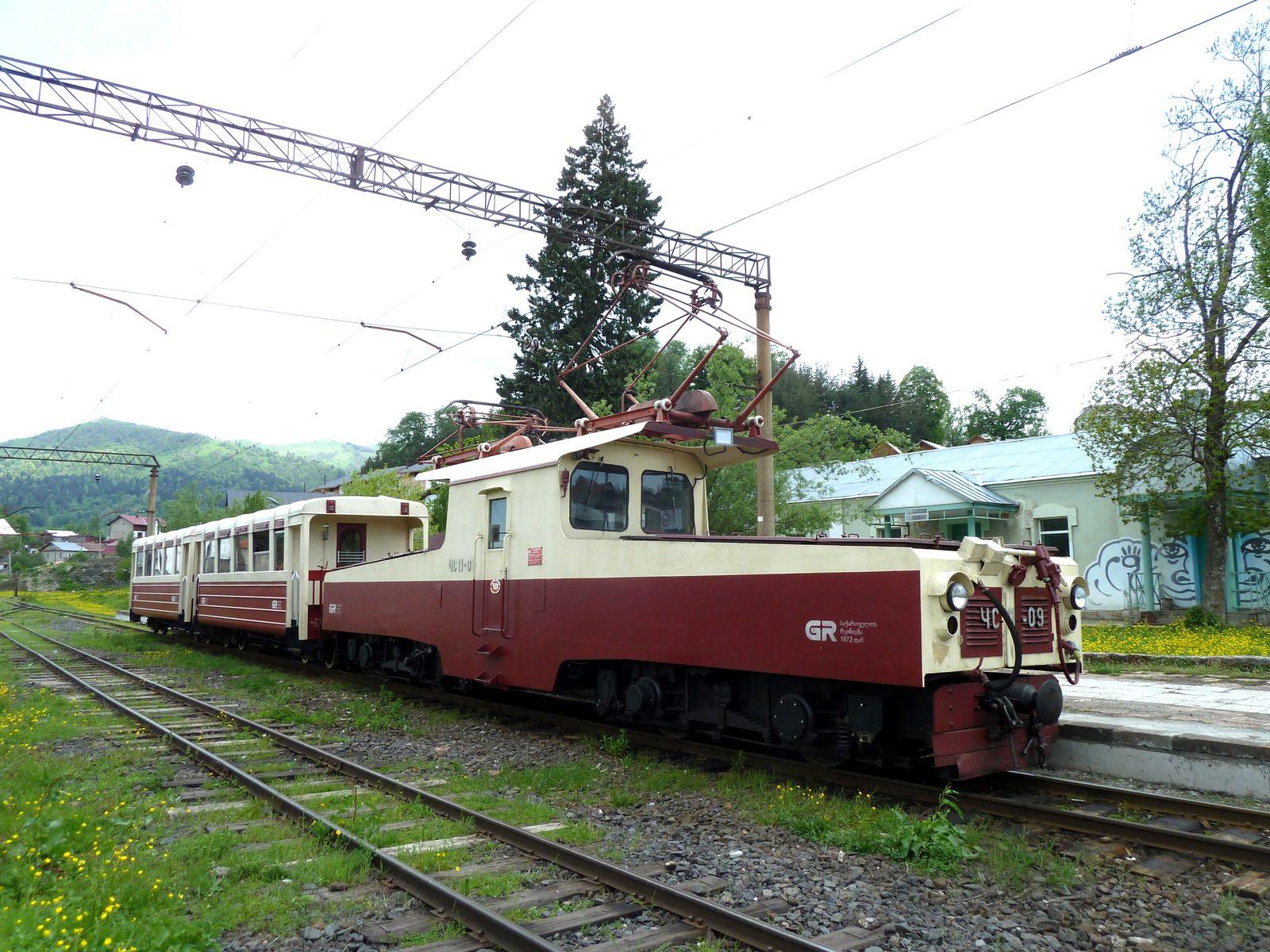
The most famous way up was always the Kukushka, a 37 km narrow-gauge railway that opened in 1902 and took about 2.5 hours to wind from Borjomi to Bakuriani, crossing a steel bridge near Tsagveri that is often attributed to Gustave Eiffel. The train has been out of service since 2020 while the line, its stations and its rolling stock are restored. In October 2026 Georgia's economy minister said the railway was expected to resume operations in December 2026, but no timetable had been published at the time of writing.
Bakuriani or Gudauri for skiing?
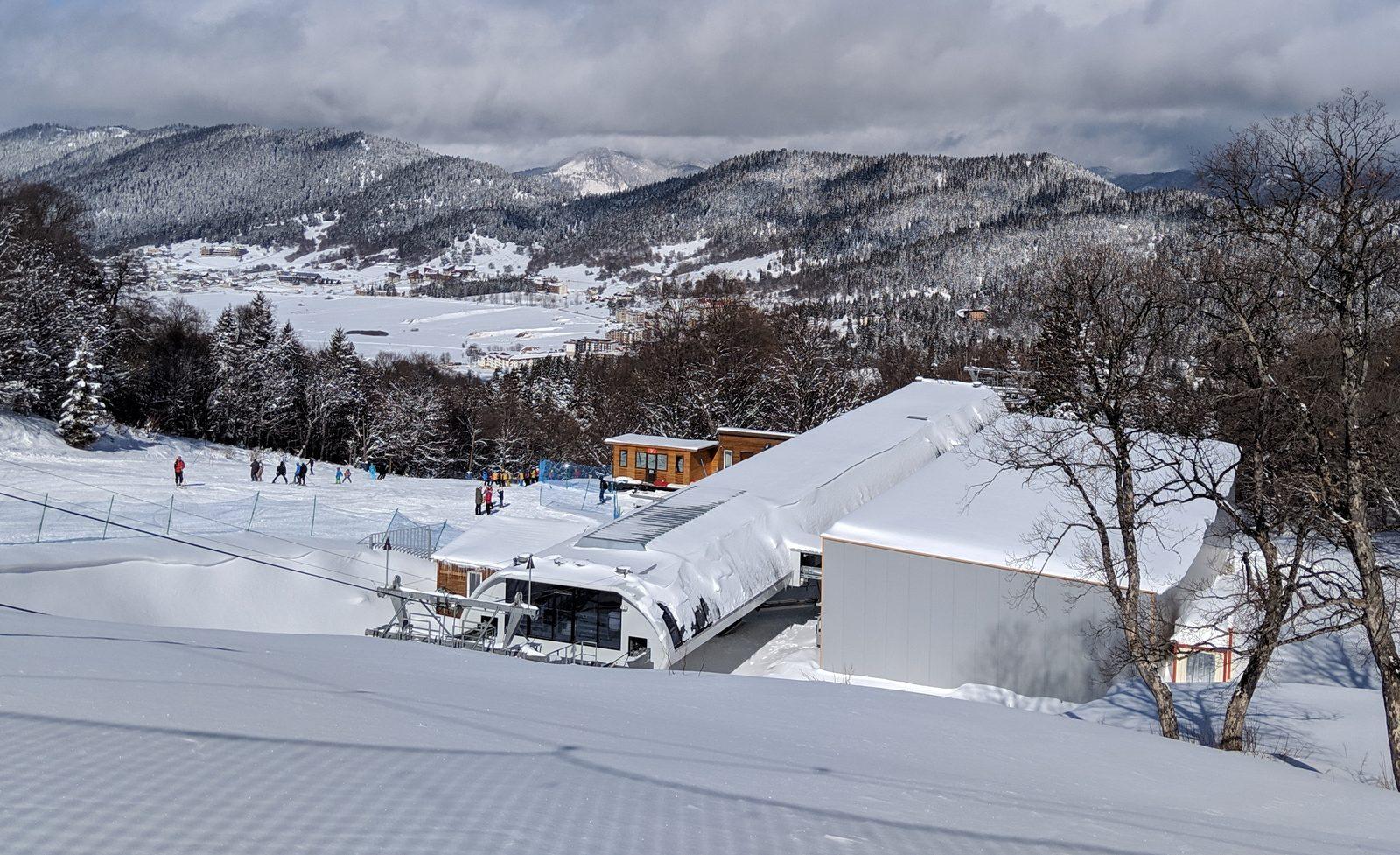
Bakuriani is Georgia's main family ski resort: it sits at about 1,700 m in a wide forested valley, has two main ski areas, Didveli and Kokhta-Mitarbi, with the highest lift on Didveli reaching about 2,700 m, and it hosted the 2023 FIS Freestyle Ski and Snowboard World Championships. The 2026/27 season is set to open on 20 December 2026, and snow usually lasts from late November or December to the end of March. Gudauri, on the Georgian Military Road north of Tbilisi, is closer to the capital and the better-known resort: from Tbilisi Airport it is about 135 km and 2 hours 15 minutes, against about 200 km and 3 hours 10 minutes to Bakuriani. Bakuriani is generally seen as the gentler choice for beginners and families, and a one-day lift pass was 100 GEL (about €34) for adults in late 2026, compared with 120 GEL in Gudauri. For the alternative, read our guide to getting from Tbilisi Airport to Gudauri.
If you are flying in for a ski week, the simplest plan is to go straight from the plane to your hotel: the Tbilisi Airport to Bakuriani transfer takes about 3 hours 10 minutes and starts from €120 per vehicle, with vans for families and groups carrying skis and boards. Because the road to Bakuriani always passes through Borjomi, it is easy to break the journey for a walk in Central Park.
Tbilisi → BakurianiView transfer & prices · €120Side trips from Borjomi: Rabati Castle and Vardzia
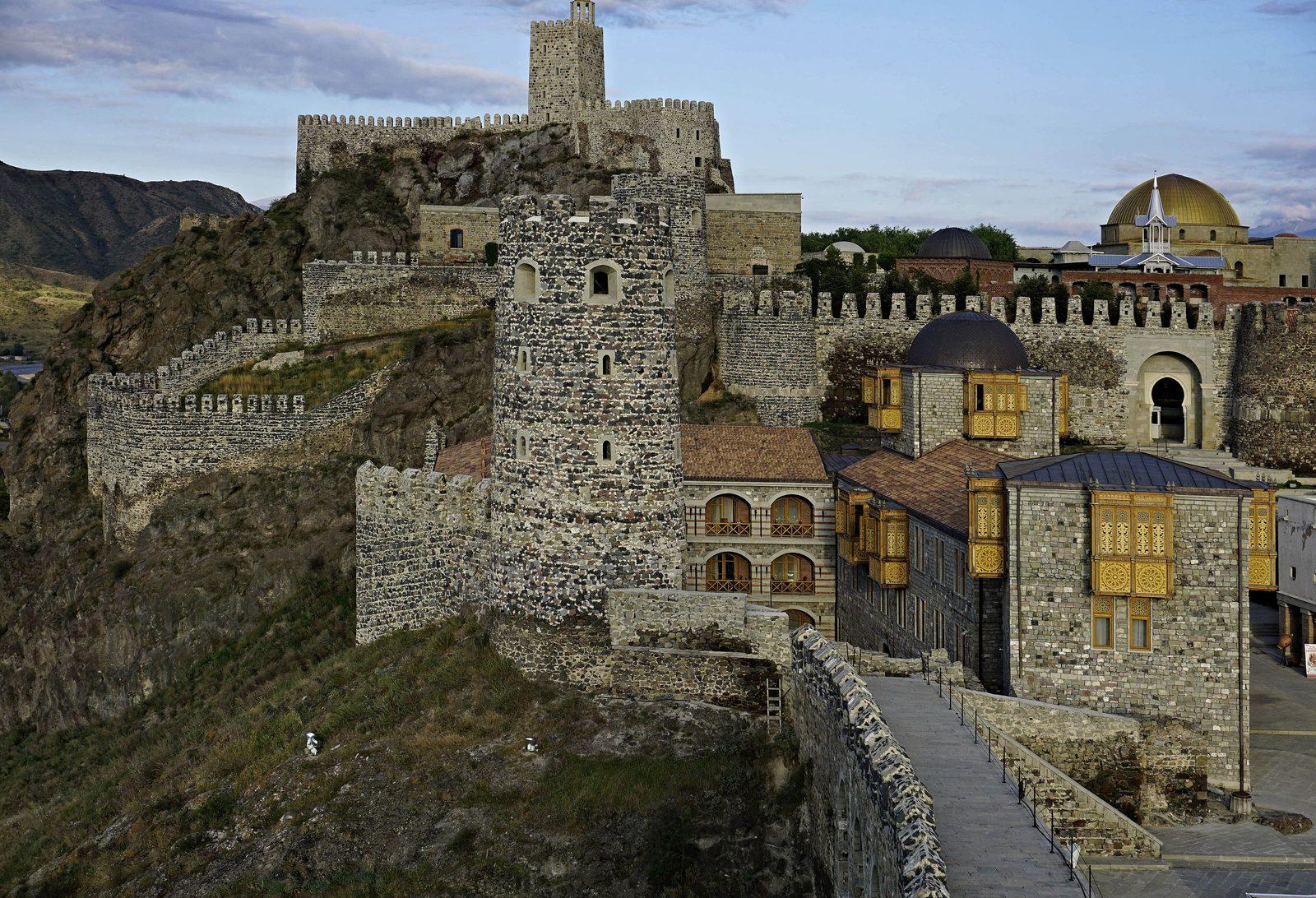
Borjomi is the natural base for exploring the south of Samtskhe-Javakheti. Akhaltsikhe is about 50 km further down the S8, roughly 50 minutes by car or just under an hour by the hourly minibus from Borjomi. Its main sight is Rabati Castle, a fortress complex first recorded in the 9th century and heavily rebuilt in 2011–2012, which brings together a citadel, an 18th-century mosque, a church, baths and the old walls on a hill above the town. Allow an hour or two to walk the walls and towers.
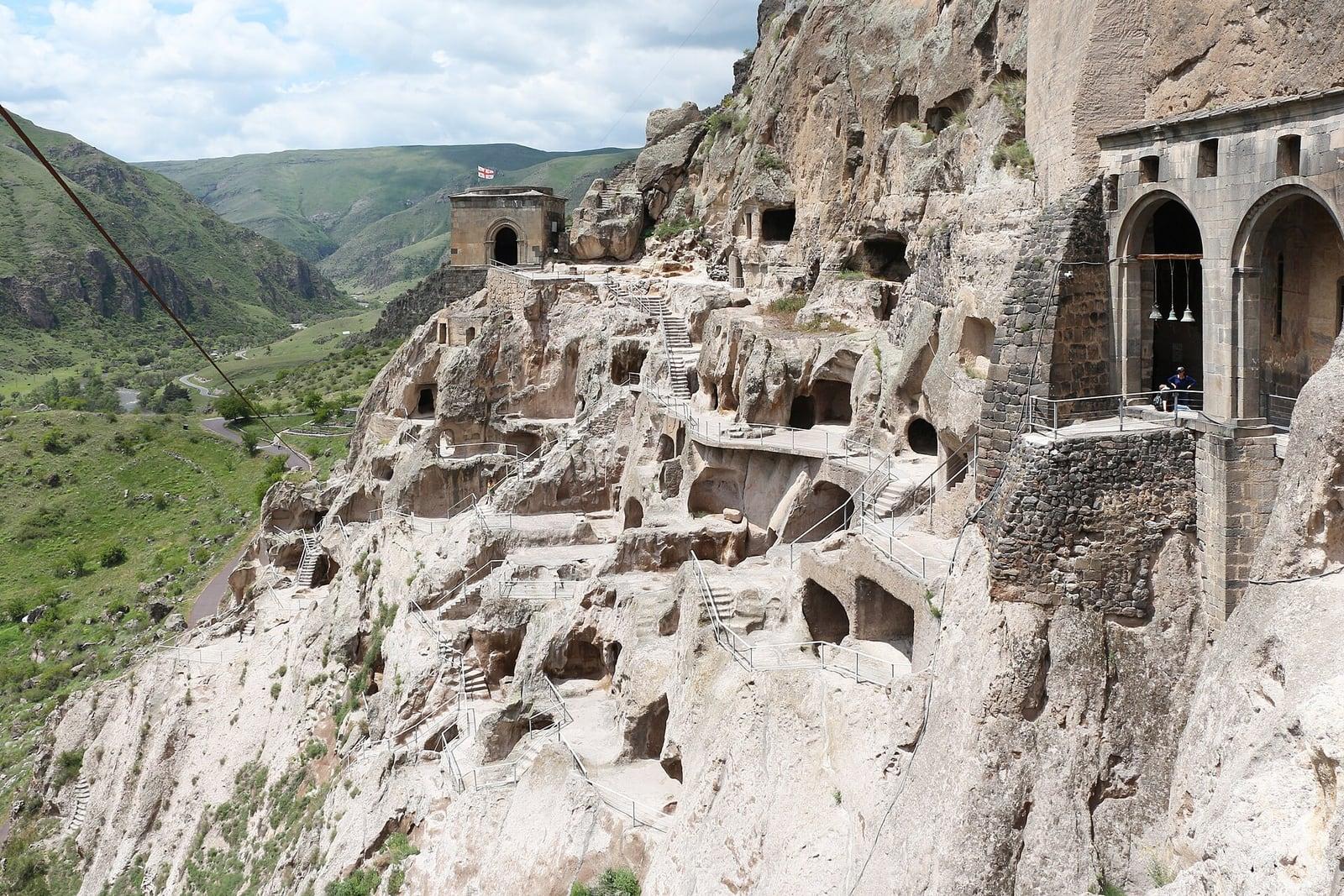
Vardzia, the 12th-century cave monastery cut into a cliff above the Mtkvari, is about 100 km and 2 hours from Borjomi, or around 60 km and 1.5 hours beyond Akhaltsikhe, passing the hilltop Khertvisi Fortress on the way. From Tbilisi it is about 225 km and 4 to 5 hours each way, which is why most travellers split the trip with a night in Borjomi or Akhaltsikhe. A comfortable two-day plan is Tbilisi to Borjomi via Uplistsikhe on day one, then Rabati and Vardzia on day two, before heading back. Both sites feature in our list of the best places to visit in Georgia.
Can you visit Borjomi as a day trip from Tbilisi?
Yes, Borjomi works as a day trip from Tbilisi, but it is a long one: with around 5 hours of driving there and back, you get about 4 to 5 hours in town, enough for Central Park, the sulphur pools and the cable car. Staying one or two nights is more relaxing and lets you add the national park, Bakuriani, Rabati or Vardzia. If you only have one free day and want an easier outing, the Kakheti wine region is closer to Tbilisi.
- Day trip: leave Tbilisi early, stop briefly at Uplistsikhe, spend the afternoon in Central Park and at the sulphur pools, and drive back in the evening
- One night: Tbilisi to Borjomi via Uplistsikhe, an evening walk in the park, then a morning hike or a trip up to Bakuriani before returning
- Two nights: add a full day to Rabati Castle and Vardzia, or a long national park hike
When is the best time to visit Borjomi?
Borjomi is a year-round destination. Late spring to early autumn is the best time for hiking in the national park and walking to the sulphur pools, while summer brings visitors escaping the heat of Tbilisi to the cooler gorge. Autumn is the most colourful season, when the forest turns gold and red. In winter the sulphur pools stay open, the park offers snowshoe routes, and Bakuriani's ski season runs from about late December to the end of March. Book transport and accommodation early for the New Year holidays and winter weekends, when Bakuriani is at its busiest.
Arriving at Tbilisi Airport first?
Many visitors start in Tbilisi before heading west. If you are spending a few nights in the capital first, a transfer from Tbilisi Airport into the city takes about 25 minutes and costs from €25 per vehicle. For a full overview of arrival options, taxis and transfers across the country, see our Tbilisi Airport and Georgia transfer guide, and to compare taxis, Bolt and buses on price, read how much a Tbilisi Airport transfer costs.
Which option should you choose?
For solo travellers with light luggage and a flexible schedule, the Didube marshrutka is cheap, frequent and perfectly fine. For couples, families and groups, for anyone with ski gear or arriving at Tbilisi Airport, and for travellers who want to stop at Uplistsikhe on the way, a private transfer is the most comfortable choice, and because the price is per vehicle it often costs less per person than you expect. Whichever you choose, plan at least one night in Borjomi if you can: the gorge, the springs and the side trips to Bakuriani, Rabati and Vardzia reward a slower pace.
Tbilisi → BorjomiView transfer & prices · €100Frequently asked questions
How long does it take to get from Tbilisi to Borjomi?
By car or private transfer, Tbilisi to Borjomi takes about 2 hours 30 minutes for the 160 km drive. Marshrutkas from Didube take around 2.5 hours, and the local train takes about 4 hours 15 minutes.
How much is a transfer from Tbilisi to Borjomi?
A private transfer from Tbilisi to Borjomi starts from €100 per vehicle, a fixed price agreed when you book. Because you pay per vehicle rather than per seat, the cost per person falls for couples, families and groups.
Is there a train from Tbilisi to Borjomi?
Yes, a slow local train runs from Tbilisi Central Station to Borjomi Parki and takes about 4 hours 15 minutes. As of mid-2026 there were two trains a day, around 06:35 and 18:45, for about 2 GEL, but check the current timetable at the station.
How much is the marshrutka from Tbilisi to Borjomi?
The marshrutka from Didube bus station to Borjomi costs around 15 GEL (about €5) as of late 2026. Minibuses leave roughly hourly from about 08:00 to 19:00 and take around 2.5 hours.
How far is Bakuriani from Borjomi, and is the Kukushka train running?
Bakuriani is about 30 km from Borjomi, around 40 minutes to an hour by road. The Kukushka narrow-gauge train has been out of service since 2020; officials expected it to restart in December 2026, but check locally for a timetable.
Is Borjomi worth a day trip from Tbilisi?
Yes, Borjomi is worth a day trip if you leave early, giving you about 4 to 5 hours for Central Park, the sulphur pools and the cable car. An overnight stay is better if you also want to hike or visit Bakuriani, Rabati Castle or Vardzia.
Sources
- Wander-Lush: How to get from Tbilisi to Borjomi (train, marshrutka, stops)
- Wander-Lush: Things to do in Borjomi (park, sulphur pools, cable car, trails)
- Wikipedia: Borjomi
- Wikipedia: S8 highway (Georgia)
- Georgia National Parks: Borjomi-Kharagauli National Park
- Wikipedia: Uplistsikhe
- Wikipedia: Bakuriani
- Wander-Lush: 10 things to know before you visit Bakuriani
- Wander-Lush: How to get from Tbilisi to Bakuriani
- Wander-Lush: The Kukushka train from Borjomi to Bakuriani
- Georgia Today: Borjomi–Bakuriani Kukushka railway to resume operations in December
- Wikipedia: Rabati Castle
- Rome2rio: Borjomi to Akhaltsikhe Castle
- Wander-Lush: How to get to Vardzia
- Lokalee: Full-day guided shared tour to Vardzia, Rabati and Borjomi
Related transfer routes
Related articles
- Georgia With Kids: Family Transfers to the Mountains (2026)How to arrange safe, private transport for a family in Georgia's mountains: drive times to each resort, what the law says about child seats, which vehicle to book and what to ask a transfer company.
- How to Get to Mestia & Svaneti: Drive, Bus or Fly (2026)Every way to reach Mestia and Svaneti compared, from a private transfer out of Kutaisi or Tbilisi to the marshrutka, the train via Zugdidi and the small plane from Natakhtari, plus the road to Ushguli.
- Ski Season Transfers: When to Book for the Alps & GeorgiaWhen ski season peaks, why Saturdays get busy, and how early to book your Geneva or Tbilisi transfer for a smooth start to the slopes.
Travelling around Georgia?
Private transfers from Tbilisi and Kutaisi airports to Kazbegi, Gudauri, Batumi and beyond, at fixed prices with 24/7 support.